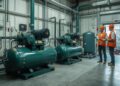
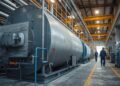
A smart factory is a manufacturing environment where machines, production systems and software are connected so data can be captured, analysed and used to improve operations. Instead of relying mainly on manual checks and delayed reports, a smart factory gives manufacturers better visibility, faster decisions and more consistent control over production, maintenance and quality.
For many companies, this does not mean replacing the entire plant with futuristic technology. In practice, smart manufacturing often starts with better data collection, real-time production monitoring and gradual integration between equipment, systems and teams. For a broader view of the topic, see Industry 4.0 and smart manufacturing in Malaysia.
What is a smart factory?
A smart factory is a factory that uses connected machines, sensors, control systems and software to monitor operations, share data and improve decision-making in real time. Its purpose is to make production more visible, responsive and efficient through better information, integration and ongoing optimisation.
That definition is important because a smart factory is not just about adding robots or buying new machinery. It is about creating a connected factory where information from different parts of production can be understood and acted on quickly. This may include machine status, output, downtime, quality data, work orders, maintenance records and inventory information.
In other words, a smart factory combines physical production with digital visibility. It links what is happening on the shop floor to the systems used by supervisors, engineers, quality teams, planners and management.
How a smart factory works in practice
At a practical level, a smart factory works by turning production activity into usable data, then using that data to support action. Not every smart factory is fully autonomous. Many begin with monitoring, alerts and reporting before moving into more advanced automation and optimisation.
- Capture data from machines and processes. Sensors, PLCs, machine controllers, inspection systems and operator inputs collect information such as cycle time, temperature, pressure, machine status, reject rates or stoppages.
- Transmit the data. The information is sent through industrial networks to systems such as SCADA, MES, ERP or analytics platforms.
- Analyse what is happening. Software turns raw signals into dashboards, trends, alarms, production records or maintenance indicators that people can understand.
- Trigger action. The result may be a warning to a technician, an updated production schedule, a quality alert, a maintenance task or an automatic machine response.
- Improve continuously. Teams use the data to reduce downtime, improve process control, strengthen traceability and make better planning decisions over time.
For example, a packaging line may send live status data to a dashboard. If one machine repeatedly stops, supervisors can see the pattern immediately instead of finding out after the shift. Maintenance can investigate the root cause, planners can adjust schedules sooner and management gets a clearer view of actual equipment performance.
This is why people often ask, “how a smart factory works” in simple terms. The answer is that it connects operations, data and decisions. The technology matters, but the real value comes from what the factory does with the information.
Core technologies behind a smart factory
A smart factory depends on several technologies working together. Not every site needs all of them at once, and the right mix depends on the process, equipment and business goals.
IIoT sensors and industrial connectivity
Industrial IoT, often written as IIoT in manufacturing, refers to connected devices and sensors used in industrial operations. These sensors collect machine and process data such as vibration, temperature, pressure, run status or output count.
The role of IIoT is to make previously hidden activity visible. If a machine was only checked manually once per shift, connected sensing can provide a far clearer picture of how it performs throughout the day.
PLCs and control systems
A programmable logic controller, or PLC, is a control device used to run machines and industrial processes. PLCs receive signals from sensors, follow programmed logic and send commands to motors, valves, conveyors and other equipment.
In a smart factory, PLCs remain essential because they are often the point where operational data begins. They help bridge the physical process and the digital systems that monitor or analyse it.
SCADA systems
SCADA stands for supervisory control and data acquisition. A SCADA system gathers data from equipment and displays it through visual screens, alarms and trend views.
Its value is operational visibility. Supervisors and engineers can see machine conditions, process changes and abnormal events more quickly than they could through manual observation alone.
MES
A manufacturing execution system, or MES, is software that helps manage production execution on the shop floor. It can track work orders, production status, material use, operator activity and quality records.
MES matters because it connects planning with actual production performance. It helps answer questions such as what is being produced now, what was completed, where delays occurred and which batch or lot was affected.
ERP integration
Enterprise resource planning, or ERP, is used to manage broader business processes such as procurement, inventory, planning, finance and order management.
When MES and ERP integration is done well, production data does not stay isolated on the shop floor. Orders, material needs and completion records can move more smoothly between operations and business systems. That supports better manufacturing data integration and reduces reliance on duplicate manual entry.
Robotics and automated handling
Robotics can be part of a smart factory, especially for repetitive, precise or hazardous tasks. Common uses include pick-and-place, loading and unloading, assembly, packaging and palletising.
Robots by themselves do not create a smart factory. Their role becomes more valuable when they are integrated into larger production data and control systems, allowing performance, stoppages and output to be monitored alongside the rest of the line.
Machine vision
Machine vision uses cameras, lighting and software to inspect products or guide equipment. It is often used for presence checks, label verification, defect detection, dimensional inspection or orientation control.
Inside a smart factory, machine vision improves quality control by creating faster and more consistent inspection data. It can also provide digital records that support traceability and process improvement.
Cloud computing and edge computing
Cloud computing means data is processed or stored on remote platforms, while edge computing means data is processed closer to the machine or production line.
Cloud systems can support centralised reporting, multi-site visibility and advanced analytics. Edge systems can help when fast local response is needed or when manufacturers want to reduce dependence on constant external connectivity. Many factories use a mix of both.
Data analytics and predictive maintenance
Data analytics turns raw production information into patterns, trends and decisions. One common use is predictive maintenance, where machine condition data is used to identify signs of wear or abnormal behaviour before a failure causes major disruption.
This does not mean software can predict every breakdown perfectly. The practical benefit is earlier warning and better maintenance planning compared with reacting only after equipment fails.
Cybersecurity
As more systems become connected, cybersecurity becomes a core operational issue. A smart factory depends on reliable access to machine data, production systems and business platforms. Weak access control, poor network separation or unmanaged devices can create serious risk.
Cybersecurity in manufacturing is not only an IT concern. It affects uptime, data integrity, process continuity and trust in digital systems.
Smart factory vs traditional factory: what changes?
The difference between a smart factory and a traditional factory is not simply that one has more technology. The bigger change is how information moves through the operation and how quickly the factory can respond.
| Area | Traditional Factory | Smart Factory |
|---|---|---|
| Data visibility | Often delayed, manual or fragmented | More connected and available in near real time |
| Maintenance approach | Reactive or calendar-based | Condition-based or better informed by machine data |
| Quality control | Heavily dependent on offline checks and paperwork | More integrated inspection, digital records and faster feedback |
| Production planning | Updates may rely on manual reporting | Progress can be tracked with stronger shop-floor visibility |
| Traceability | Records may be scattered across paper and separate systems | Data can be linked across batches, work orders and equipment |
| Decision speed | Problems may be discovered late | Issues can be identified and acted on faster |
In many factories, the shift happens gradually. A site may still use established machinery and manual processes, but become significantly smarter once critical data is digitised, connected and used consistently.
Smart factory vs factory automation
Factory automation and smart factory are closely related, but they are not the same thing.
Automation focuses on making a task or process run automatically. This can include conveyors, PLC-controlled machines, robotic handling, automatic filling, vision inspection or other systems that reduce manual intervention.
A smart factory goes further by connecting those automated or semi-automated systems to data platforms, management systems and analytics tools so the factory can monitor performance, coordinate decisions and improve continuously.
A machine can be automated without being part of a smart factory. For example, a stand-alone automated line may run well but still produce limited operational insight if its data is not integrated with the rest of the plant. By contrast, a smart factory treats automation as one component within a wider digital operating model.
Readers comparing the two topics may also find it useful to explore factory automation in Malaysia, especially when deciding whether the immediate need is task-level automation, system integration or both.
Key benefits of a smart factory
The main benefits of a smart factory come from better information and faster coordination. The impact will vary by process, but the advantages usually show up in practical operational areas rather than abstract technology goals.
Better production visibility
Real-time production monitoring helps teams understand what is running, what has stopped and where bottlenecks are forming. Instead of waiting for end-of-shift reports, supervisors can respond while the issue is still affecting output.
Reduced unplanned downtime
Connected equipment data can highlight recurring faults, unstable conditions or early signs of wear. This supports more informed maintenance planning and can reduce avoidable production interruptions.
Improved quality control
When inspection data, process conditions and production records are connected, quality teams can identify trends sooner. This supports quicker corrective action and stronger traceability when investigating defects or complaints.
Faster decision-making
A connected factory reduces the delay between an event on the shop floor and the decision made by operations, quality, maintenance or planning teams. Faster information flow usually leads to faster response.
Stronger traceability
Digital records can make it easier to link materials, machine conditions, process steps and finished output. This is useful for internal control, customer requirements and root cause analysis.
More efficient use of resources
When manufacturers understand actual machine utilisation, process interruptions and production patterns, they can often manage labour, materials, energy and maintenance effort more effectively.
Better basis for continuous improvement
Improvement programmes are stronger when they are based on evidence rather than assumptions. A smart factory gives teams more reliable operational data to support process refinement, waste reduction and better problem solving.
Common challenges and limitations
Smart factory initiatives also come with real constraints. A practical strategy starts by recognising them early.
Legacy equipment integration
Many factories use a mix of old and new machines. Some equipment was not designed for easy data connectivity, so integration can require additional hardware, interface work or selective retrofitting.
Data silos
Production, maintenance, quality and planning data often sit in separate systems or spreadsheets. If these systems do not communicate, the factory may generate more data without gaining much more clarity.
Workforce skills and adoption
Technology alone does not create results. Operators, technicians, engineers and managers need to understand how to use new dashboards, alarms, reports and workflows. If teams do not trust the data or see its relevance, adoption will be weak.
Change management
Smart manufacturing often changes responsibilities and routines. Manual reporting may be replaced by digital records. Maintenance may shift from reactive work to more planned intervention. Resistance can arise if the purpose and benefits are not explained clearly.
Cybersecurity concerns
More connectivity increases exposure. Manufacturers need to think carefully about user access, network architecture, device management and system resilience when connecting operational technology with business systems.
Investment prioritisation
It is easy to buy disconnected technology that looks advanced but does not solve a priority problem. The better approach is to link spending to specific operational outcomes such as reduced stoppages, better OEE visibility, improved traceability or faster quality response.
Uncertain return on investment
Some benefits are straightforward to observe, while others take time to measure. If the project has no baseline data and no clear KPIs, it becomes difficult to judge whether the investment is working.
Examples of smart factory applications
Smart factory applications can be simple or advanced. The most useful ones usually solve a specific operational problem.
Real-time machine monitoring
Machines send running status, downtime events or output counts to a central dashboard. Production leaders can compare actual performance across lines and shifts without waiting for manual updates.
Predictive maintenance
Condition data such as vibration or temperature is monitored to identify unusual patterns. Maintenance teams use that information to inspect equipment earlier and plan intervention more effectively.
Automated quality inspection
Machine vision systems inspect products during production and flag nonconformities faster than manual sampling alone. The inspection data can also be logged for traceability and analysis.
Production scheduling visibility
When shop-floor progress is linked to planning systems, planners can see whether work orders are on track, delayed or blocked. This improves coordination between production, materials and delivery commitments.
Energy monitoring
Connected meters and system dashboards can help manufacturers understand where energy is being used across lines or equipment groups. This is often the first step toward identifying waste or unusual operating patterns.
Digital traceability
Production records, batch information, inspection results and machine status can be linked digitally instead of being spread across separate logs. That makes investigations faster when a quality issue occurs.
These examples show that smart manufacturing is not limited to large multinational plants. Many applications can be introduced in focused areas first, then expanded as the factory learns what works.
How manufacturers can start building a smart factory
A smart factory is usually built in phases rather than through one large purchase. This is often the most practical approach for both SMEs and larger manufacturers.
- Assess current pain points. Start with actual operational issues such as repeated downtime, weak traceability, manual reporting delays, quality escapes or poor schedule visibility.
- Identify measurable use cases. Choose one or two problems where better data could lead to a clear improvement. Keep the scope specific.
- Digitise data collection. Replace critical paper-based or ad hoc records with structured digital data where possible. The goal is usable information, not data for its own sake.
- Connect priority equipment. Focus first on bottleneck machines, high-value assets or processes that create the biggest operational impact.
- Integrate systems gradually. Connect shop-floor data with SCADA, MES, ERP or maintenance systems step by step. Full integration is rarely necessary on day one.
- Train teams and define workflows. Make sure operators, engineers and supervisors understand what the new data means and how they are expected to act on it.
- Set KPIs and review results. Track practical indicators such as downtime patterns, response time, scrap trends, schedule adherence or data accuracy.
- Scale based on proven value. Once a pilot delivers useful operational learning, expand the approach to other lines, assets or plants.
This approach helps avoid a common mistake: investing in technology before defining the business problem. A smart factory strategy works best when it is tied to production performance, maintenance effectiveness, quality control or planning discipline.
Smart factory considerations for manufacturers in Malaysia
For manufacturers in Malaysia, the core principles are the same as anywhere else, but implementation often needs to account for local operating realities.
Mixed equipment environments
Many plants operate with a mix of newer automated systems and older legacy equipment. That can make a full digital rollout difficult, so a phased connection strategy is often more realistic than a complete replacement plan.
Workforce capability development
Smart factory projects need people who can interpret data, manage systems and maintain connected equipment. Capability building may involve operator training, technician upskilling, engineering support and stronger coordination between production and IT or OT teams.
Vendor and integration readiness
Technology selection should go beyond product features. Manufacturers should assess whether vendors can support integration with existing machinery, control systems and business software, and whether the solution is practical for the site’s maintenance and operations teams to sustain.
Start with business use cases, not labels
Some companies feel pressure to adopt Industry 4.0 terminology before they have clear priorities. In practice, it is more useful to begin with a narrow operational problem and build from there. A factory does not become smarter because it uses fashionable language; it becomes smarter when data improves decisions.
Verify current programmes and compliance requirements
Manufacturers may come across references to grants, incentives, standards or official frameworks related to digitalisation and smart manufacturing. These can change over time, and applicability may depend on sector, activity, location or project scope. Before acting, companies should verify current requirements and programme details directly with the relevant official authority or verified source.
That point is especially important when evaluating a smart factory Malaysia roadmap. Decision-makers should separate proven operational needs from assumptions about funding, mandatory standards or expected returns.
Conclusion: a smart factory is a journey, not a single technology purchase
A smart factory is best understood as a connected way of operating, not a single machine or software platform. It combines equipment, data, systems and people so manufacturers can see more, respond faster and improve more consistently.
The most successful approach is usually phased: solve a real production problem, build reliable data, integrate gradually and expand based on results. Whether the starting point is monitoring, maintenance, quality or planning, the goal is the same: better operational decisions supported by better information.
Frequently Asked Questions
What is the main purpose of a smart factory?
The main purpose of a smart factory is to improve manufacturing performance by connecting machines, systems and data. This gives teams better visibility, faster response and stronger control over production, quality, maintenance and traceability.
How is a smart factory different from automation?
Automation focuses on making a machine or process run automatically. A smart factory includes automation but adds connectivity, data sharing, system integration and analytics so the wider operation can be monitored and improved more effectively.
What technologies are needed to build a smart factory?
Common technologies include IIoT sensors, PLCs, SCADA, MES, ERP integration, robotics, machine vision, analytics platforms, cloud or edge computing and cybersecurity tools. Not every factory needs all of them at once; the mix depends on the use case and existing equipment.
Can SMEs implement a smart factory gradually?
Yes. Many SMEs start with one use case such as machine monitoring, maintenance visibility or digital quality records. A phased approach is often more practical than a full transformation project because it limits risk and helps build internal capability.
What are the biggest challenges in smart factory adoption?
Common challenges include integrating legacy equipment, breaking down data silos, building workforce skills, managing organisational change, protecting connected systems from cyber risk and proving value through clear operational KPIs.