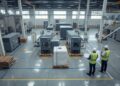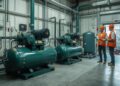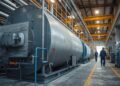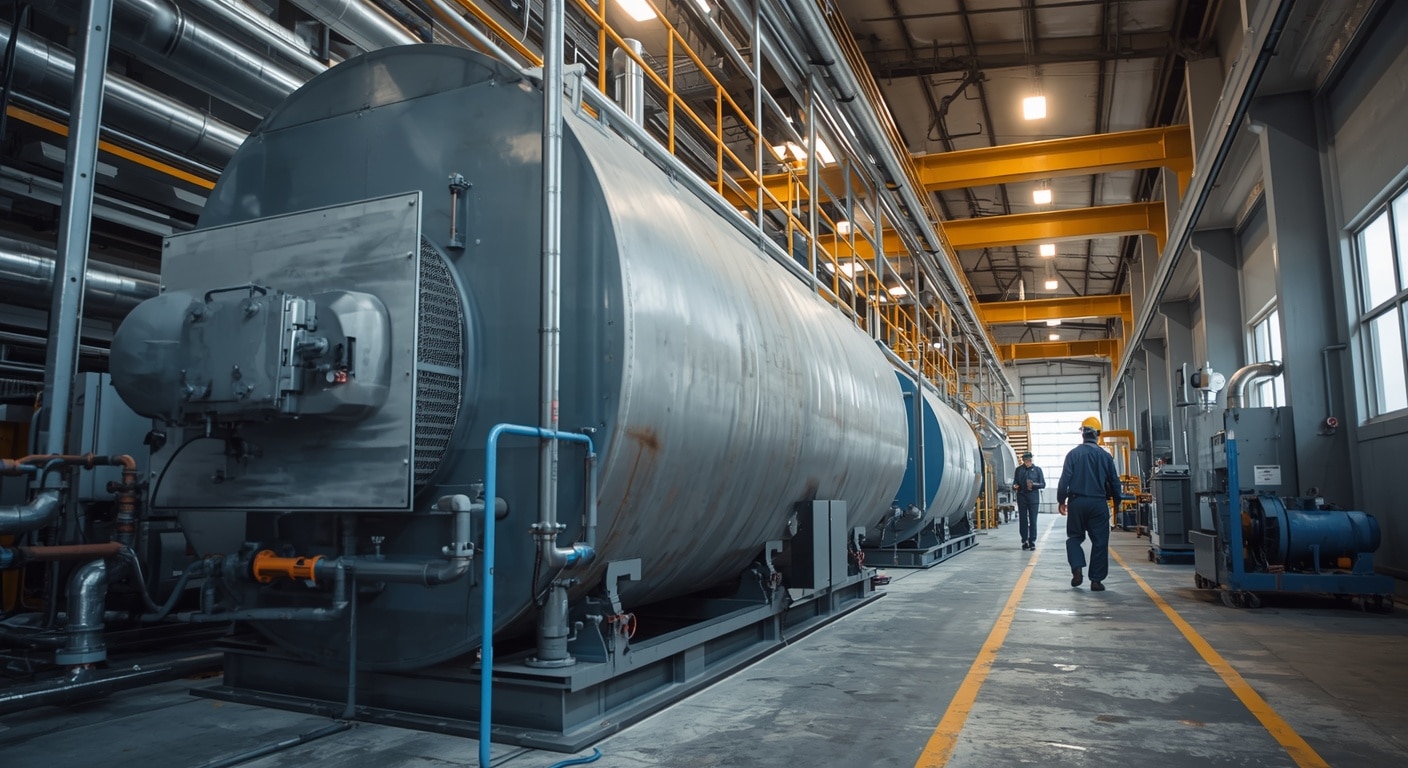
Industrial boilers manufacturing operations rely on are utility systems that generate steam or hot water for process heating, cleaning, sterilization, drying and other factory support functions. In many plants, the boiler is not a standalone machine but part of a wider heat and utility system that affects production reliability, product quality and day-to-day operating discipline.
For manufacturers, understanding how boiler systems work is important before buying, upgrading or troubleshooting them. The right system depends on the process, the heat medium required, factory layout, maintenance capability and how the plant actually operates from shift to shift.
If you are comparing factory utility options more broadly, this industrial machinery and equipment guide gives useful context on how boilers fit alongside other production and support systems.
What industrial boilers mean in manufacturing
Industrial boilers in manufacturing are systems that produce steam or hot water for factory use. Manufacturers use them for process heating, cleaning, sterilization, drying, humidification and utility support. Their value comes from delivering controlled heat where production processes need it, rather than simply providing general building heating.
In practice, a manufacturing boiler system supports processes that need stable and repeatable thermal energy. Depending on the plant, that may mean steam delivered to production equipment, hot water circulated through heat exchangers, or a thermal fluid used for controlled indirect heating.
How industrial boilers are used in factories
Boilers are used in factories whenever production depends on heat transfer. The exact application differs by industry, but the operating principle is similar: the boiler creates a usable heat medium, and that heat is distributed to where the process needs it.
Process heating
Many production lines require heat to change material properties, support reactions, cook, melt, dry or maintain process temperatures. A steam boiler for factory use is common when fast heat transfer is needed or when multiple process points must be supplied from one central utility source.
In some plants, the boiler heats a secondary system rather than contacting the product directly. For example, steam or hot water may pass through a heat exchanger to warm tanks, vessels, jackets or process lines.
Cleaning and sanitation
Boiler applications in manufacturing often include washdown support, cleaning systems and sanitation processes. This is especially relevant in operations where hygiene and equipment cleanliness are important. Hot water and steam can both support cleaning, but the best choice depends on the equipment design and required cleaning method.
Sterilization and controlled thermal treatment
Some manufacturing environments use steam as part of sterilization or tightly controlled heat treatment steps. Steam is often selected because it transfers heat effectively and can be distributed across multiple points within a plant. Where the process is sensitive, consistency of pressure, temperature control and condensate management matter as much as the boiler itself.
Drying and moisture control
Boilers may support drying processes directly or indirectly. Steam coils, heated chambers and other process heating equipment can be integrated into drying lines. In some facilities, controlled humidity is also important for product stability or material handling, and steam can help maintain those conditions.
Utility and facility support
Not every use is directly on the production line. Industrial utilities in manufacturing can also include space heating for certain work areas, preheating systems, hot water supply for service use, and support for ancillary equipment. Even when the boiler is not the core production machine, its failure can still disrupt output, cleaning cycles and planned shift operations.
Common types of industrial boilers used in manufacturing
When people discuss industrial boiler types, they are often referring to the heat medium and the way the system is used in the plant. In manufacturing, the most common categories are steam boilers, hot water boilers and thermal oil systems. Each serves different process conditions and operating needs.
Steam boilers
A steam boiler generates steam for distribution to production equipment, heat exchangers or plant services. Steam systems are widely used because steam carries heat efficiently and can serve multiple process points from a central source.
Manufacturing boiler systems based on steam are common in factories that need process heating, cleaning support, sterilization or thermal control across several departments. However, steam systems also involve a broader support network, such as feedwater handling, condensate return and steam distribution management.
Hot water boilers
A hot water boiler industrial users select is designed to heat water for circulation through a closed loop or similar heating network. These systems are often suitable where the process requires controlled hot water rather than steam.
Hot water systems may be simpler for some applications, particularly where the plant does not need phase change from water to steam. They can support heating duties through coils, jackets, space conditioning or service water networks, depending on system design.
Thermal oil systems
Thermal oil systems heat a circulating thermal fluid rather than producing steam or hot water. They are typically considered when a process needs indirect heating at controlled temperatures without using steam as the primary medium.
Although many buyers refer to these together with boilers, the selection logic is different. Manufacturers should compare the process temperature range, operational complexity, maintenance demands, safety considerations and plant integration before deciding whether a thermal oil system is more suitable than a conventional boiler arrangement.
There is no universal best option. Suitability depends on process temperature, pressure conditions, product sensitivity, plant layout and the internal resources available to operate and maintain the system properly.
Steam boilers vs hot water boilers: what is the difference?
The main difference is the output medium. Steam boilers produce steam for process applications that need rapid heat transfer or distributed thermal energy, while hot water boilers heat water for circulation where the process only requires hot water. The better option depends on how the factory uses heat, not on a fixed preference for one technology.
| Factor | Steam Boiler | Hot Water Boiler |
|---|---|---|
| Output medium | Steam | Heated water |
| Typical manufacturing use | Process heating, sterilization, cleaning, humidification, multiple heat-use points | Closed-loop heating, equipment jackets, service hot water, selected process heating duties |
| Process suitability | Useful when steam itself is needed or when heat must be distributed efficiently across the plant | Useful when the process requires hot water rather than steam |
| System complexity | Often includes feedwater management, steam distribution and condensate return considerations | Often based on circulation and temperature control through a water loop |
| Maintenance focus | Water treatment, traps, condensate handling, burner and control performance | Water quality, circulation components, burner and control performance |
For manufacturers, the practical question is not which type is more advanced. The real question is what heat medium the process needs and how the system will fit into actual plant operations.
Key components of an industrial boiler system
An industrial boiler should be evaluated as a system, not just as a vessel with a burner. Many performance and reliability issues come from the surrounding utility network rather than the boiler shell alone.
Boiler vessel or heat generator
This is the central unit where fuel energy is converted into usable heat. Depending on the design, it produces steam, hot water or another heated medium for the production process.
Burner
The burner mixes fuel and air for combustion. Its condition affects combustion stability, controllability and overall operating suitability. Burner selection and setup should be matched to the boiler design, available fuel and expected operating profile.
Feedwater system
In steam systems, the feedwater system supplies water to the boiler. This is more important than many buyers first assume because feedwater quality, stability and control have a direct effect on operation, maintenance and component life.
Water treatment
Boiler water treatment manages the condition of the water entering and circulating through the system. Poor water quality can contribute to scale, corrosion and operational instability. Even a well-selected boiler can underperform if water treatment is neglected.
Controls and instrumentation
Controls regulate firing, temperature, pressure, water level and other operating conditions. Good controls help the system respond to changing load while supporting repeatability and safe operation. The right control strategy also matters when the plant has variable production schedules or multiple demand points.
Distribution system
For steam systems, this includes steam distribution pipework and related control components. For hot water systems, it includes circulation loops and associated equipment. Distribution design affects how efficiently heat reaches the process and how consistently users receive it.
Condensate return
Where steam is used, condensate return may be part of the broader system. Returning condensate can improve operational control and reduce waste within the utility loop, but the actual design depends on plant layout and process needs.
Safety devices
Industrial boiler safety depends on multiple protective elements working together. These can include operating controls, alarms, shutdown functions and other protective devices appropriate to the system design. Manufacturers should treat safety as part of engineering, operation and maintenance discipline rather than as an afterthought during procurement.
How to choose the right industrial boiler for a manufacturing plant
Choosing industrial boilers manufacturing plants can actually use effectively requires more than comparing boiler models. A good decision starts with the process and works outward to utilities, operations and service support.
- Define the process requirement. Identify what the factory needs the boiler to do. Is the requirement process heating, cleaning, sterilization, drying, humidification or facility support? Different applications place different demands on the system.
- Confirm the required output medium. Decide whether the process needs steam, hot water or another thermal medium. This is the first major filter when comparing boiler selection for manufacturing.
- Review the operating pattern. Consider whether demand is steady, intermittent, seasonal or shift-based. A boiler serving a continuous production line may need a different configuration from one supporting batch processes.
- Assess fuel availability and plant utility support. Fuel choice affects combustion equipment, storage arrangements, services and operational planning. Availability and consistency of supply matter as much as the boiler itself.
- Check installation footprint and plant layout. Boiler location, access, pipe routing, water treatment space and maintenance access should all be reviewed before procurement decisions are finalized.
- Evaluate maintenance capability. A system that is technically suitable on paper may still be a poor fit if the plant lacks trained operators, service support or a disciplined maintenance routine.
- Consider integration with existing utilities. The boiler must fit with current process equipment, controls, water systems and site operating procedures. Retrofit situations often involve more complexity than greenfield installations.
- Plan for future expansion. If the factory expects additional lines, new products or changing process loads, that should be considered early rather than after installation.
This step-by-step approach helps procurement teams and plant managers compare options more realistically. It also reduces the risk of selecting a boiler based only on purchase-stage impressions rather than long-term operational fit.
Factors that affect boiler performance and operational suitability
Even the right boiler type can become an operational problem if plant conditions are not managed well. Manufacturers should look beyond initial equipment selection and consider the factors that influence daily reliability and lifecycle value.
Water quality
Water quality has a major effect on manufacturing boiler systems, especially steam systems. Untreated or poorly managed water can contribute to internal deposits, corrosion and unstable operation. Water treatment is not an optional extra; it is part of the operating system.
Load variation
Some factories run stable production schedules, while others experience frequent demand swings. Rapid changes in heating demand can challenge control stability and influence how smoothly the system serves the process.
Plant uptime requirements
A boiler supporting a critical production line has different implications from one serving a secondary utility function. Where downtime is costly, resilience, maintenance planning and backup strategy deserve early attention.
Insulation and heat distribution quality
Heat losses do not come only from the boiler. Pipe insulation, valve condition, distribution layout and general utility housekeeping can all influence system suitability. A well-sized boiler can still deliver poor practical performance if heat is lost before reaching the process.
Controls and operating discipline
Controls matter, but so does how operators use them. Frequent manual overrides, inconsistent startup practices or poor response to changing loads can reduce reliability and create avoidable maintenance issues.
Maintenance discipline
Boiler maintenance manufacturing teams carry out consistently often determines how well the system performs over time. Neglected cleaning, poor recordkeeping and delayed repairs tend to show up as production interruptions rather than isolated utility issues.
Maintenance and safety considerations for industrial boilers
Industrial boilers need preventive maintenance and disciplined operation. A boiler is a critical utility asset, and problems often develop gradually before they become visible as leaks, unstable firing, poor temperature control or production disruption.
The exact maintenance program depends on the equipment design, operating conditions and manufacturer guidance, but the following checklist covers practical areas manufacturers should review.
Practical maintenance and safety checklist
- Inspect for leaks and visible deterioration. Check the boiler, connected pipework, valves and fittings for signs of leakage, corrosion or abnormal wear.
- Maintain water treatment. Monitor water condition and keep treatment practices aligned with system needs to reduce scale and corrosion risks.
- Review burner condition and combustion stability. Poor burner performance can affect controllability, reliability and operating consistency.
- Test controls and protective functions. Operating controls, alarms and shutdown-related functions should be checked as part of routine maintenance practices appropriate to the equipment.
- Check feedwater and circulation components. Pumps, valves and related items should be kept in working condition so the system can respond properly to demand.
- Inspect steam or hot water distribution points. Problems in the network can affect the process even when the main boiler unit appears normal.
- Monitor condensate return systems where applicable. Steam system issues are not limited to the boiler room.
- Keep housekeeping standards high. A clean, organized boiler area supports safe access, easier inspection and faster fault identification.
- Train operators. Operator awareness is essential for startups, shutdowns, responding to abnormalities and knowing when to escalate an issue.
- Document recurring issues. Maintenance records help identify patterns, not just isolated failures.
Manufacturers should also distinguish between general good practice and verified legal obligations. Inspection, safety and pressure equipment requirements can vary by equipment type, application and jurisdiction, so any formal compliance requirement should be confirmed with the relevant authorities and qualified professionals before decisions are made.
Industrial boiler considerations for manufacturers in Malaysia
When assessing an industrial boiler Malaysia factories may install, local operating context matters. The right choice is shaped not only by process requirements but also by site conditions, utility planning and the practical realities of ongoing support.
Fuel and utility planning
Manufacturers should review fuel availability, site utility connections, storage implications where relevant and how the boiler fits with the wider factory utility plan. A technically suitable factory boiler system may still be difficult to operate if supporting utilities are constrained.
Climate and operating environment
Malaysia’s climate can influence ventilation planning, boiler room conditions, water management and general equipment housekeeping. While climate does not determine the boiler type on its own, it can affect how supporting systems are designed and maintained.
Service support and parts availability
During procurement, local service coverage and access to replacement parts are practical considerations. A boiler that is difficult to support can create longer downtime risk, especially for plants without deep in-house maintenance capability.
Compliance verification
Manufacturers should verify any applicable safety, environmental, pressure equipment, inspection or licensing requirements with the relevant Malaysian authorities and qualified advisers before installation or major upgrades. The exact requirements can depend on the equipment, fuel, process, location and how the system is used in the plant.
Questions to ask before buying or upgrading an industrial boiler
Before shortlisting industrial boilers, procurement teams and factory managers should pressure-test the decision with a structured set of questions.
- What process does the system need to support, and what heat medium does that process actually require?
- Will the boiler serve one production area or multiple departments?
- Is demand continuous, batch-based or highly variable across shifts?
- How will the boiler integrate with existing process equipment, controls and utility networks?
- What space is available for the boiler, water treatment, distribution piping and service access?
- What level of operator skill and maintenance support does the plant currently have?
- How quickly can service support and spare parts be obtained if there is an unplanned shutdown?
- What happens to production if the boiler is offline?
- Are future line expansions or product changes likely to alter heat demand?
- Have the plant’s technical and compliance requirements been verified before procurement is finalized?
These questions help SMEs and larger manufacturers alike avoid narrow equipment comparisons. A boiler purchase is really a process and utility decision, not just a mechanical equipment order.
Frequently Asked Questions
What are industrial boilers used for in manufacturing?
Industrial boilers are used to generate steam or hot water for process heating, cleaning, sterilization, drying, humidification and other factory utility functions. Their role depends on the production process and how heat needs to be delivered within the plant.
What is the difference between a steam boiler and a hot water boiler?
A steam boiler produces steam, while a hot water boiler heats water for circulation. Steam systems are often chosen when steam itself is required for the process or when heat must be distributed across multiple use points. Hot water systems are used where the process only requires heated water.
Which industries commonly use industrial boilers?
Industrial boilers are commonly found in sectors such as food processing, textile manufacturing, chemical processing, pharmaceutical manufacturing and other plants that rely on process heating, sanitation or controlled thermal treatment.
How do manufacturers choose the right boiler system?
Manufacturers usually start by defining the process requirement, then confirming the required heat medium, reviewing the operating pattern, checking installation constraints, assessing maintenance capability and evaluating integration with existing utilities and future expansion plans.
What maintenance is important for industrial boilers?
Important maintenance areas include water treatment, leak inspection, burner checks, control testing, distribution system inspection, housekeeping and operator training. A consistent preventive maintenance routine is usually more effective than reacting only after production issues appear.
What should Malaysian manufacturers verify before installing a boiler?
Malaysian manufacturers should verify any applicable safety, environmental, pressure equipment, inspection and licensing requirements with the relevant authorities and qualified professionals. Requirements can vary depending on the equipment, fuel type, process and site conditions.
Conclusion
Industrial boilers are essential utility assets in many manufacturing environments, but the right choice depends on more than output alone. Manufacturers should match the system to the process, understand the full supporting network and assess how the boiler will be operated and maintained in real factory conditions.
Whether the need is steam, hot water or another heating medium, the best decisions come from evaluating application fit, utility integration, serviceability and compliance verification before procurement or upgrade work begins.