Automatic packaging machines are used in factories to automate repetitive packing tasks such as filling, sealing, wrapping, labelling, cartoning, and palletising. For manufacturers, the main value is not just speed. Packaging automation also helps improve consistency, reduce manual handling, support traceability, and connect packaging more closely to the overall production flow.
In practice, there is no single machine that suits every packaging operation. The right setup depends on the product, packaging material, pack format, changeover needs, floor space, and how the machine will fit with upstream production and downstream handling. This guide explains how automatic packaging machines work, the common machine types used in factories, and what Malaysian manufacturers should evaluate before buying.
What are automatic packaging machines?
Automatic packaging machines are industrial systems that automate one or more packaging tasks, such as filling, sealing, wrapping, labelling, cartoning, or palletising. They are used to improve consistency, throughput, and labour efficiency in factory packaging operations while reducing dependence on manual packing steps.
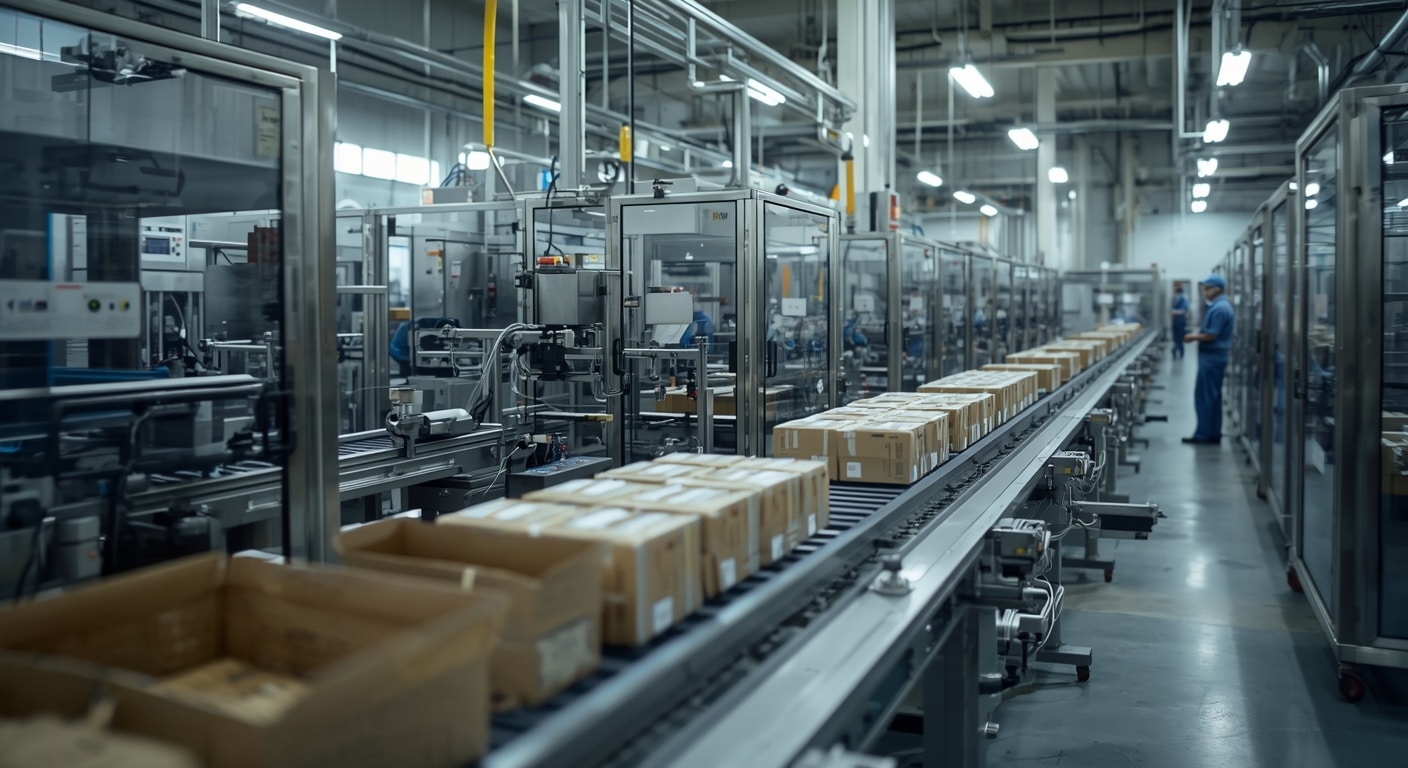
Some machines automate one specific function, such as applying labels or sealing pouches. Others combine multiple steps into one integrated system. In a larger packaging line, several machines may work together with conveyors, sensors, and control systems to move products from infeed to final packed output.
For readers comparing broader equipment categories, the Industrial Machinery & Equipment Guide provides useful context on how packaging equipment fits into factory machinery planning.
How automatic packaging machines work in a factory
In most factories, automatic packaging machines follow a practical sequence. The exact configuration varies by product and pack format, but the workflow usually includes the same core stages.
- Product infeed: Products enter the packaging line from a production process, holding hopper, conveyor, or transfer system.
- Positioning and separation: The system aligns, spaces, or guides products into the correct orientation for the next packaging step.
- Filling, dosing, or wrapping: Depending on the product, the machine may fill a pouch, dose powder into a container, wrap an item in film, or place units into trays or cartons.
- Sealing or closing: The package is closed using heat sealing, capping, taping, lidding, crimping, or another method suited to the pack type.
- Coding or labelling: Batch codes, dates, product labels, or shipping labels may be applied at this stage.
- Inspection: The line may check for label presence, seal quality, pack integrity, or correct product count before release.
- Discharge and transfer: Finished packs move to carton packing, case packing, palletising, or warehouse staging.
The purpose of automation is to make these steps more repeatable and less dependent on manual timing. In a simple line, one machine may handle only filling and sealing. In a more advanced line, automated packing systems may connect multiple stations into one controlled flow using conveyors, sensors, and PLC control systems.
Common types of automatic packaging machines
Automatic packaging machine types are usually grouped by the function they perform in the packaging line. Some are primary packaging machines that pack the product directly. Others are secondary or end-of-line systems that prepare products for storage, shipping, and retail handling.
Filling and dosing machines
Filling and dosing machines place a measured amount of product into a container or package. They are commonly used for liquids, powders, granules, creams, and pastes.
Examples include filling products into bottles, jars, pouches, sachets, tubs, or trays. The correct filling method depends on how the product behaves. A free-flowing powder is handled differently from a thick paste, while fragile granules may require gentler product handling to avoid damage.
These machines matter because packaging quality often starts with dosing consistency. Overfilling can waste material, while underfilling can create quality and customer issues. Manufacturers usually assess product flow characteristics, hygiene needs, changeover frequency, and compatibility with the chosen packaging format before selecting this type of industrial packaging equipment.
Sealing, wrapping and form-fill-seal machines
Sealing machines close packages so the product can be protected, transported, and presented properly. Depending on the pack style, sealing may involve heat, pressure, film application, or mechanical closure.
Wrapping machines are used where products need to be enclosed in film or overwrapped for presentation, protection, or bundling. This is common for consumer goods, multipacks, and some industrial items.
Form-fill-seal machines are widely used in packaging line automation because they combine several steps into one process. A form-fill-seal system typically forms the package from rollstock or flat material, fills the product, then seals it. These machines are often used for pouch, bag, and sachet applications. For factories looking to reduce manual interventions, this integrated approach can simplify line design compared with separate forming, filling, and sealing stations.
Labelling, cartoning and case packing machines
Labelling machines apply product, compliance, or logistics labels to bottles, jars, cartons, pouches, and cases. In many factories, labelling also supports traceability by helping identify product batches, dates, or destination information.
Cartoning machines place primary packs into cartons. This is an important secondary packaging step for products that need better shelf presentation, grouping, or added protection during handling. Cartoning machines are commonly used for food products, pharmaceuticals, personal care items, and household goods.
Case packing machines place cartons, pouches, bottles, or other packaged units into larger shipping cases. This prepares product for palletising and distribution. A manufacturer may add cartoning or case packing machines when a line has matured beyond manual secondary packing and needs more consistent pack presentation or better transport readiness.
Palletising and end-of-line systems
Palletising systems handle the final stage of packaging automation by stacking cases, bags, or finished packs onto pallets in a repeatable pattern. This improves consistency in warehouse handling and can reduce manual lifting at the end of the line.
End-of-line packaging may also include case sealing, strapping, stretch wrapping, printing, inspection, and conveyor transfer. These systems matter because packaging does not end when the product is sealed. If packs are unstable, incorrectly grouped, or difficult to move, downstream warehouse and shipping operations become harder to manage.
For manufacturers shipping large volumes or handling heavier cases, end-of-line automation can be as important as the primary packaging machine itself.
Where automatic packaging machines are used
Automatic packaging machines are used across many manufacturing sectors because packaging needs vary widely by product and distribution method.
- Food and beverage: Used for filling, sealing, pouch packing, bottle handling, labelling, wrapping, and case packing. Product sensitivity, hygiene expectations, and pack integrity usually shape machine selection.
- Pharmaceutical manufacturing: Often requires controlled handling, reliable labelling, and clear traceability through primary and secondary packaging stages.
- Personal care and cosmetics: Common applications include bottle filling, tube sealing, cartoning, and retail-ready presentation.
- Household products: Detergents, cleaners, and related items may use filling, capping, labelling, bundling, and shipping case preparation.
- Electronics components: Packaging may focus on unit counting, bagging, protective wrapping, and organised secondary packing for transport.
- General consumer goods: Packaging automation supports presentation, consistency, and more efficient handling from packing room to warehouse.
Packaging requirements differ by contamination risk, product fragility, moisture sensitivity, pack format, shelf presentation, and transport needs. A machine that works well for dry snacks may be unsuitable for liquid products, and a line built for stable carton packs may not suit irregularly shaped items.
Benefits of automatic packaging machines for factories
The main benefits of automatic packaging machines for factories are operational rather than cosmetic. When selected properly, they help make packaging more predictable and easier to manage.
- Improved consistency: Automated handling can produce more uniform packs, labels, seals, and pack presentation.
- Reduced manual handling: Fewer repetitive manual tasks can lower dependence on hand-packing at critical steps.
- Better throughput support: Packaging is less likely to become a bottleneck when machine capability is matched to production needs.
- Cleaner presentation: Better alignment, sealing, wrapping, and labelling can improve pack appearance.
- Easier line integration: Machines can be linked with conveyors, filling systems, inspection points, and end-of-line equipment.
- Support for traceability and quality checks: Coding, labelling, and inspection stages can be built into the packaging flow.
For many manufacturers, the real benefit is process control. Packaging becomes less dependent on individual operator technique and more integrated with the routine of the production line.
Limitations and challenges to consider
Automation can improve a packaging line, but it also introduces new requirements. Buyers should assess the operational challenges as carefully as the expected benefits.
Changeover complexity is one common issue. If a factory runs many pack sizes, materials, or product variants, changing parts or adjusting settings may take time. A machine that performs well on one standard pack may be difficult to manage in a mixed-product environment.
Operator training is another factor. Even user-friendly machines still require setup knowledge, fault response, cleaning discipline, and routine checks. Without proper training, downtime and packing errors can increase.
Maintenance needs should not be underestimated. Packaging machines include moving parts, sensors, sealing systems, drives, controls, and wear components. If maintenance support is weak, the line may become unreliable.
Floor space and layout also matter. A machine may fit physically into the factory, but still create bottlenecks if operators cannot access it properly or if product flow between upstream and downstream stations is awkward.
Integration challenges are common when adding new equipment to an older line. The machine may need to communicate with existing conveyors, printing systems, inspection devices, or handling equipment.
Finally, there is the risk of buying beyond actual need. Some factories invest in advanced packaging features they rarely use, while overlooking core issues such as pack stability, maintenance access, or operator simplicity.
How to choose the right automatic packaging machine
Choosing the right automatic packaging machine starts with the packaging process, not the machine brochure. A practical selection process usually includes the following steps.
- Define the product clearly. Identify whether the product is liquid, powder, paste, granule, fragile solid, or irregular item. Product behaviour affects the filling, handling, and sealing method.
- Set the packaging format. Confirm whether you need bottles, jars, trays, cartons, pouches, sachets, shrink bundles, shipping cases, or palletised loads.
- Assess required line throughput. The machine should suit actual production flow and planned growth, without assuming unrealistic future demand.
- Review available floor space. Measure not only machine footprint, but also product infeed, discharge, operator access, cleaning access, and maintenance clearance.
- Check material compatibility. Packaging materials, closures, labels, and films must work reliably with the machine design and application method.
- Consider cleaning and product handling needs. Products with stricter hygiene, dust, or contamination concerns may need easier cleaning access or more controlled handling.
- Choose the right level of automation. Fully automatic equipment is not always the best answer if the line still depends heavily on manual upstream or downstream steps.
- Plan integration with the line. Consider conveyors, filling machines, printers, inspection systems, case handling, and end-of-line transfer.
- Evaluate maintenance and service support. Ask how routine parts, troubleshooting, and after-sales support will be handled over the life of the equipment.
- Compare suppliers on fit, not features alone. The best option is usually the one that matches your product, people, packaging material, and operating reality.
For many buyers, packaging machine selection is as much about process fit as machine design. A simpler machine that operators can run reliably may be a better choice than a more complex system that is difficult to maintain.
Questions to ask suppliers before purchase
Before committing to factory packaging machines, it helps to use a structured supplier checklist. The goal is to reduce surprises after installation.
- Which pack formats and packaging materials does the machine support?
- How are product size or pack size changeovers handled?
- What parts need to be changed or adjusted during changeover?
- What level of operator training is required for normal operation and setup?
- What maintenance tasks are expected from the factory team?
- How are spare parts supplied, and which parts are considered routine wear items?
- What after-sales service and troubleshooting support is available?
- Can the machine communicate with existing control systems, printers, conveyors, or inspection devices?
- What support is provided during installation, commissioning, and acceptance testing?
- What safety features and operator safeguards are included?
- What documentation is provided for operation, maintenance, cleaning, and parts identification?
These questions are especially important when buying imported equipment or integrating a new machine into an existing packaging line.
Implementation considerations for Malaysian factories
For Malaysian manufacturers, implementation planning should go beyond the machine itself. Many packaging projects succeed or fail based on site readiness, operator capability, and support responsiveness.
Factory layout constraints are often the first issue. SME factories may have limited room for infeed conveyors, accumulation areas, case handling, or pallet movement. It is worth checking how the packaging machine will fit into the real production path rather than looking only at the machine footprint.
Workforce training is another practical consideration. If the equipment will be operated across multiple shifts, the handover process, setup instructions, and troubleshooting routines should be simple enough for day-to-day use.
Maintenance responsiveness matters because packaging equipment often sits close to the final shipping stage. When it stops, finished goods flow can be affected quickly. Buyers should understand how technical support, spare parts, and service response will be handled in their location.
Imported equipment lead times and parts availability should also be clarified with the supplier before purchase rather than assumed. The exact situation depends on the equipment source, local representation, and stocking arrangements.
Utility and site requirements should be confirmed early. Electrical supply, compressed air, product feeding method, discharge handling, and environmental conditions can all affect installation planning. Specific requirements vary by machine, so they should be verified directly with the supplier and relevant technical personnel.
Where safety, electrical, or industry-specific compliance is relevant, manufacturers should verify the applicable requirements with the appropriate supplier, engineer, or official authority for their operation. The exact obligations can depend on the product category, process, and installation environment.
Automatic packaging machines vs semi-automatic machines
Both automatic and semi-automatic machines have a place in manufacturing. The better choice depends on product volume, labour model, process stability, and growth plans.
| Factor | Automatic packaging machines | Semi-automatic machines |
|---|---|---|
| Labour involvement | Lower direct operator involvement during routine running | Higher operator involvement in feeding, positioning, or pack handling |
| Consistency | Usually more repeatable when set up correctly | More dependent on operator method and pace |
| Flexibility | Can be efficient for stable, repeatable pack formats | Often easier to adapt for smaller runs or frequent manual adjustments |
| Throughput suitability | Better suited to lines where packaging needs to keep pace with continuous production | More suitable where output is moderate or packaging is not fully line-driven |
| Operator dependency | Lower during normal operation, but setup and maintenance still matter | Higher throughout daily production |
| Typical fit | Growing manufacturers seeking packaging line automation and tighter process control | Factories needing lower complexity or a partial step into automation |
In many cases, semi-automatic machines are used as a transitional solution before a factory commits to a fully automated packing system. The choice should be based on actual operational needs, not on the assumption that full automation is always better.
Final thoughts on selecting automatic packaging machines
Automatic packaging machines can improve consistency, reduce repetitive manual work, and help factories build a more controlled packaging flow. The strongest results usually come from matching the machine to the product, packaging format, workforce capability, and line layout rather than selecting equipment based on features alone.
Before buying, manufacturers should evaluate where packaging fits in the full production process, from infeed handling to end-of-line movement. A machine that integrates well, can be maintained properly, and supports real operating needs is generally a better investment than one that is more complex than the factory requires.
Frequently Asked Questions
What is an automatic packaging machine?
An automatic packaging machine is industrial equipment that performs one or more packaging tasks with limited manual intervention. It may fill, seal, wrap, label, carton, case pack, or palletise products as part of a factory packaging line.
What types of automatic packaging machines are commonly used in factories?
Common types include filling and dosing machines, sealing machines, wrapping machines, form-fill-seal machines, labelling machines, cartoning machines, case packing machines, and palletising or end-of-line systems. Each type serves a different stage of the packaging process.
How do automatic packaging machines improve factory operations?
They help improve packaging consistency, reduce manual handling, support steadier throughput, and make it easier to integrate coding, labelling, and inspection into the line. They can also improve handling between production, packing, and warehouse operations.
How do you choose the right packaging machine for a manufacturing line?
Start with the product, packaging format, and required production flow. Then assess material compatibility, floor space, cleaning needs, automation level, integration requirements, maintenance support, and supplier service capability before making a decision.
What is the difference between automatic and semi-automatic packaging machines?
Automatic machines carry out more packaging steps with less direct operator involvement during normal running, while semi-automatic machines rely more on manual feeding or pack handling. Automatic systems usually offer more process consistency, while semi-automatic systems may offer simpler operation and flexibility for smaller-scale use.