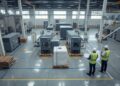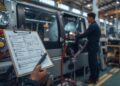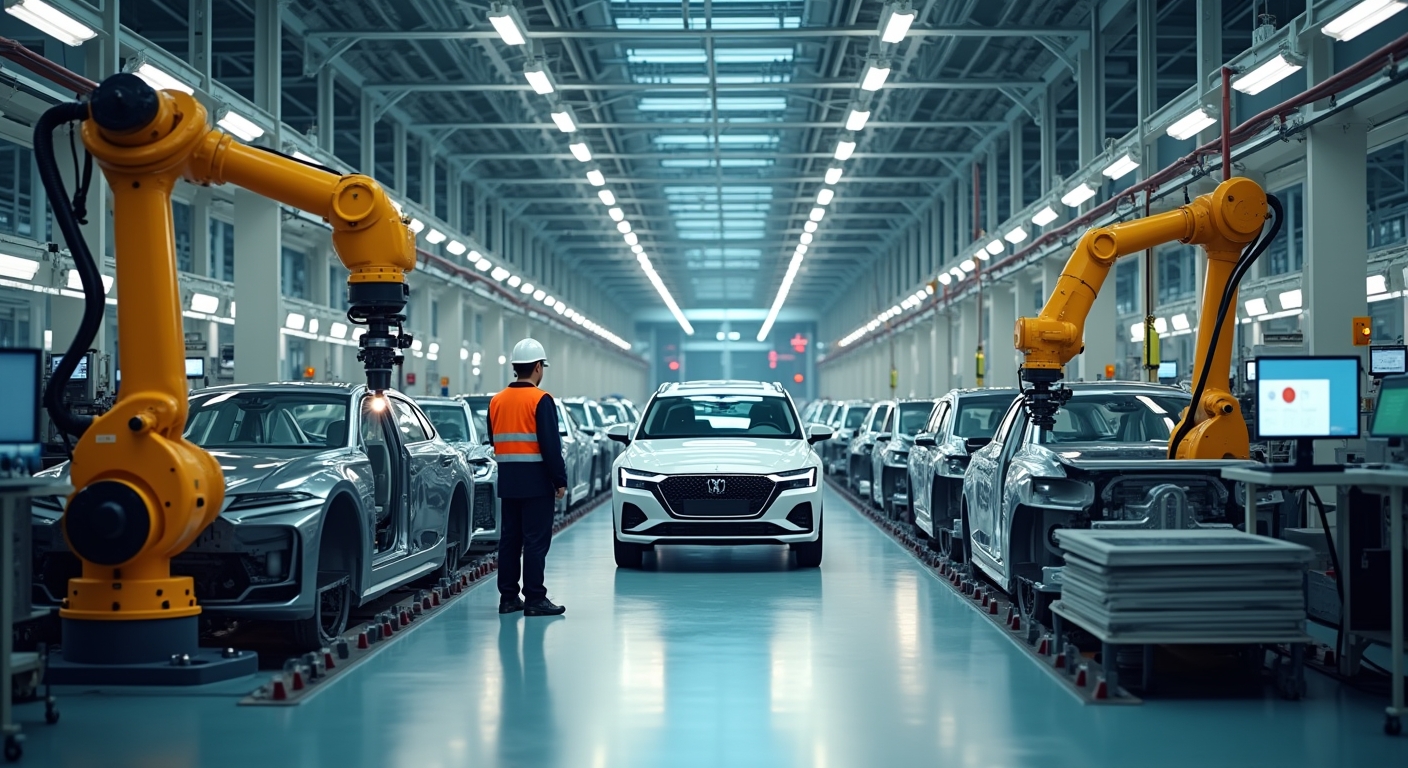
Automotive manufacturing Malaysia covers the production, assembly and supply of vehicles and automotive components within the local industrial ecosystem. It includes vehicle assembly plants, parts manufacturers, tooling and fabrication companies, electronics suppliers, logistics providers and quality-focused production systems. For manufacturers, suppliers and buyers, understanding how this sector works helps with investment decisions, sourcing strategy, operations planning and supplier development.
This guide explains the structure of the industry, the main manufacturing segments, the typical production flow, supply chain roles, quality requirements, common challenges and the technology trends shaping the sector.
What is automotive manufacturing in Malaysia?
Automotive manufacturing in Malaysia is the production and assembly of vehicles and automotive parts through a network of OEMs, component makers, contract manufacturers and supporting industrial suppliers. It covers everything from stamped metal parts and electronics to body assembly, painting, final vehicle assembly, inspection and distribution.
In practice, the automotive industry Malaysia is not limited to complete car production. It also includes companies making seats, wiring, plastic parts, fasteners, rubber components, precision-machined parts, tooling, packaging and other inputs needed to support vehicle manufacturing Malaysia at scale.
Why the automotive manufacturing industry matters in Malaysia
The automotive sector matters because it is one of the more complex forms of manufacturing. It brings together metalworking, plastics, electronics, automation, quality control, logistics and supplier coordination in one value chain. A strong automotive base can support broader industrial capability by pushing suppliers to improve consistency, documentation, traceability and process discipline.
For factory operators and SME owners, the sector is important because customer expectations are usually demanding. Automotive buyers often look for reliable delivery, repeatable quality and the ability to support ongoing model requirements over time. That makes the sector a useful benchmark for operational maturity.
It also matters to equipment suppliers, integrators and industrial service providers. Automotive factory operations typically depend on well-managed production lines, maintenance systems, material flow planning and continuous improvement. Businesses that understand these conditions are better positioned to serve the sector effectively.
For readers comparing sectors, the automotive field is one part of the wider landscape of manufacturing industries in Malaysia, but it stands out for its supply chain depth and process integration.
Main segments within automotive manufacturing Malaysia
Automotive manufacturing Malaysia includes several connected segments rather than one single activity. Each segment plays a different role in moving from materials and parts to finished vehicles and aftermarket support.
Passenger vehicle manufacturing and assembly
This segment includes the production or assembly of passenger cars and related models. Some plants focus on assembling vehicles from supplied component sets, while others have deeper local content through locally produced parts and sub-assemblies.
Commercial vehicle manufacturing
Commercial vehicle activity can include trucks, vans, buses or special-purpose vehicles, depending on the manufacturer and market focus. Compared with passenger vehicles, production volumes, build configurations and customer requirements may differ significantly.
Automotive assembly operations
Automotive assembly Malaysia often refers to plants where multiple vehicle systems are brought together into a finished unit. These operations depend heavily on line balancing, sequencing, parts availability and inspection discipline.
Automotive parts manufacturing
Automotive parts manufacturing Malaysia includes companies producing metal, plastic, rubber, electronic and interior components. These suppliers may serve OEMs directly or sell through higher-tier suppliers. Parts can range from simple brackets and trim pieces to complex assemblies that must meet tight customer specifications.
Precision components and tooling
This segment supports vehicle production through dies, molds, fixtures, jigs, machined parts and production tooling. Without these supporting capabilities, body parts, plastic components and assembly processes cannot run consistently.
Electronics and electrical systems
Modern vehicles depend on wiring systems, sensors, control modules, lighting and other electrical components. As vehicle systems become more integrated, electronics-related suppliers play a larger role in both product design support and production quality control.
Replacement parts and aftermarket-related manufacturing
Not all automotive production goes directly into new vehicles. Many manufacturers also serve replacement and maintenance markets through spare parts, consumables and repair-related components. This segment can have different lead time patterns, packaging requirements and demand cycles compared with OEM supply.
Together, these segments form a manufacturing ecosystem in which car manufacturing Malaysia relies on both final assemblers and a broad network of local parts manufacturers and specialist production partners.
How automotive manufacturing works from parts to finished vehicles
Automotive production usually follows a staged flow from component manufacturing to final inspection and delivery. While the exact sequence varies by factory and product, the process commonly includes the following steps:
- Component production: Suppliers produce parts such as metal stampings, plastic components, wiring sets, seats, glass, fasteners and electronic assemblies.
- Body fabrication: Structural and exterior parts are formed, cut or prepared for joining.
- Welding and body assembly: Panels and structural members are joined into a vehicle body or sub-assembly using controlled joining processes.
- Painting and coating: The body receives surface preparation, protective coatings and finish layers to improve appearance and corrosion resistance.
- Sub-assembly preparation: Major modules such as dashboards, doors, seats, powertrain-related systems or suspension-related assemblies are prepared for installation.
- Final assembly: Mechanical, electrical, interior and exterior components are installed in sequence along the assembly line.
- Inspection and testing: The finished vehicle is checked for fit, function, appearance and basic operational performance before release.
- Distribution: Approved vehicles and components move into storage, transport or dealer and customer delivery channels.
This flow shows why automotive OEM Malaysia operations depend on more than one plant process. The final product only works when upstream component quality, scheduling and material handling are aligned.
Key processes used in automotive factories
Automotive plants combine several production processes, each with its own quality risks and control requirements. Even when suppliers produce many of the parts externally, understanding the core factory processes helps buyers and industrial partners assess capability.
Metal stamping and fabrication
Metal stamping is used to shape sheet metal into panels, brackets and structural parts. Fabrication may also include cutting, bending, piercing or forming operations, depending on the part design. In automotive production, this stage matters because dimensional consistency at the beginning of the process affects fit and assembly quality later on.
Tooling condition is especially important. Worn or poorly maintained dies can cause variation, surface defects or rework. For that reason, stamping operations typically depend on process control, preventive maintenance and regular checks on part condition.
Welding and body assembly
Welding and body assembly join individual parts into a larger structure. This can involve automated or semi-automated joining methods, fixtures that hold parts in position and inspection checks to confirm alignment. Repeatability is critical because even small variation can create downstream problems during door fitment, trim installation or final appearance checks.
Beyond the joining process itself, body assembly depends on stable clamping, part accuracy and operator safety. A well-controlled process helps reduce rework, improve structural consistency and support smoother line flow.
Painting and surface finishing
Painting protects the vehicle surface and contributes to final appearance. A typical paint process involves surface preparation, corrosion protection, primer or intermediate coating stages and a final topcoat. Cleanliness and controlled handling are important because dust, contamination or inconsistent application can affect finish quality.
Surface finishing is not only cosmetic. In automotive manufacturing components, coatings can help protect parts from environmental exposure and support durability expectations over the life of the vehicle or component.
Final assembly and testing
Final assembly is where the vehicle begins to take complete form. Electrical systems, interior trim, glazing, seats, wheels and many other parts are installed in a planned sequence. This stage depends heavily on parts presentation, workstation design and accurate build instructions.
Testing and inspection then confirm whether the assembled vehicle meets expected functional and visual requirements. Factories may use a combination of in-line checks, end-of-line inspection and documented release procedures before the product moves to distribution.
The automotive supply chain in Malaysia
The automotive supply chain Malaysia consists of layered relationships rather than a straight buyer-seller transaction. OEMs depend on suppliers for complete modules, precision components, raw materials, tooling, packaging and transport support. A disruption at one point in the chain can affect output, cost and delivery across multiple factories.
At a practical level, supply chain performance depends on coordination. Forecast accuracy, production scheduling, engineering change communication, quality response time and inventory planning all affect whether the line keeps moving.
| Supply chain role | What the company typically does | Why it matters |
|---|---|---|
| OEMs | Design, assemble or market finished vehicles and manage major supplier relationships | Set product requirements, quality expectations and production schedules |
| Tier 1 suppliers | Supply complete systems, modules or customer-critical parts directly to OEMs | Strong influence on quality, launch readiness and delivery performance |
| Tier 2 suppliers | Supply parts, materials or processes to Tier 1 suppliers or assembly operations | Support depth of local sourcing and production continuity |
| Raw material providers | Provide metals, resins, rubber, chemicals and other industrial inputs | Material consistency affects both cost and process stability |
| Tooling and equipment specialists | Build or maintain molds, dies, fixtures, jigs and production equipment | Enable repeatable manufacturing and model change support |
| Logistics and packaging partners | Manage storage, handling, sequencing and transport of parts and vehicles | Protect lead time, line feeding and delivery reliability |
In this structure, tier 1 automotive suppliers Malaysia often act as a bridge between OEM expectations and the capabilities of the wider supplier base. Tier 2 automotive suppliers Malaysia, in turn, support those higher-level suppliers with parts, processes and material conversion services. The overall result is a manufacturing ecosystem in which resilience depends on visibility, communication and consistent execution.
Quality, safety and operational requirements
Automotive manufacturing depends on disciplined operations because defects can multiply quickly across high-volume or repeat production environments. A small issue in one part or process can affect fit, appearance, functionality or assembly efficiency further down the line.
Quality control in this sector usually emphasizes:
- repeatable production methods
- documented work instructions
- traceability of parts and batches
- incoming material checks
- in-process inspection
- control of nonconforming parts
- timely corrective action
- supplier consistency
Operational discipline is equally important. Automotive factory operations often require careful maintenance planning, change control, line-side material availability and accurate production records. Where assemblies involve many parts, even minor stock errors or document mismatches can create delays.
Worker safety also remains central in processes such as stamping, welding, paint handling and powered assembly operations. Specific safety, compliance or certification requirements can vary depending on the manufacturing activity, facility setup and customer expectations, so any standards or formal compliance references should be verified against current applicable requirements before being treated as mandatory.
Common challenges in automotive manufacturing Malaysia
Automotive manufacturers in Malaysia face many of the same pressures seen in other complex supply chains, but with added pressure from tight quality expectations and model-specific production needs.
Supply chain disruptions
Vehicle production depends on many components arriving in the correct sequence and condition. Delays in imported materials, shortages of specific parts or weak communication across suppliers can interrupt throughput quickly.
Cost pressure
Manufacturers must balance quality, productivity and material use while remaining commercially competitive. Cost pressure can affect sourcing decisions, automation plans, staffing models and inventory strategy.
Demand shifts and model changeovers
Production demand can change by vehicle category, trim level or market conditions. Model updates or line changeovers introduce risk because tooling, training, documentation and inventory all need to be aligned.
Skills and capability gaps
Automotive production requires a mix of operator skill, engineering support, maintenance capability and process discipline. Companies may struggle if they lack experienced technicians, problem-solving ability or documentation maturity.
Automation investment decisions
Automation can improve consistency and throughput, but not every process justifies the same level of investment. Businesses need to judge whether automation will reduce variation, improve safety or support customer expectations enough to justify the cost and complexity.
Rising quality expectations
As customers expect better fit, finish and reliability, suppliers also face tighter requirements for consistency, response time and defect prevention. That raises the importance of structured quality control and root-cause problem solving.
Imported component dependence
Some operations may rely on imported parts, specialist materials or equipment. That can create exposure to lead time variability, exchange-related cost changes or sourcing concentration risks.
Technology trends shaping the sector
The Malaysia automotive sector is being influenced by broader manufacturing trends rather than a single technology shift. Companies across the value chain are looking for ways to improve consistency, reduce waste and respond faster to customer demands.
Automation and robotics
Automation is commonly applied where repeatability, safety or cycle consistency matter most. Robotics may support tasks such as handling, joining, dispensing or inspection, depending on the process design. The value is usually not automation for its own sake, but better process control and reduced variation.
Digital production monitoring
Factories increasingly use digital systems to monitor downtime, output, defects and process conditions. Better visibility helps production teams respond faster to recurring issues and supports more informed maintenance and scheduling decisions.
Data-driven quality control
Quality systems are becoming more data-oriented, with greater use of traceability records, in-process checks and structured defect analysis. This helps manufacturers identify patterns rather than only reacting to final inspection failures.
Lightweight materials and design changes
Material choices continue to affect how parts are formed, joined and handled. As product designs evolve, suppliers may need to adapt tooling, fabrication methods or quality checks to suit new material combinations and assembly requirements.
Electric vehicle-related opportunities
Electric vehicles are influencing how some manufacturers think about components, electronics, assembly methods and supporting supply chains. However, any specific claims about current local EV programmes, incentives or localisation initiatives should be verified separately before being used for business decisions.
What businesses should consider before entering the automotive supply chain
Businesses that want to supply the automotive industry need more than a basic production capability. Customers typically assess whether a supplier can deliver consistent quality, stable output and reliable communication over a long period.
Before entering the automotive supply chain, companies should review the following:
- Process capability: Can the factory produce the part consistently and repeatably?
- Quality discipline: Are inspection methods, records and corrective action systems well controlled?
- Documentation: Can the business manage drawings, revisions, work instructions and change control properly?
- Delivery reliability: Can it meet schedule requirements without frequent shortages or last-minute changes?
- Tooling readiness: Are molds, dies, fixtures or gauges available and maintained adequately?
- Traceability: Can batches, materials and production history be tracked when issues arise?
- Customer approval processes: Is the company prepared for sample submission, validation checks and ongoing review?
- Engineering support: Can the business respond to technical issues, design changes or production feedback?
- Investment horizon: Is management prepared for ongoing improvement rather than expecting immediate returns?
For SMEs, one of the biggest mistakes is assuming automotive work is just another fabrication or assembly job. In reality, customer expectations often extend to recordkeeping, response speed, containment actions, packaging consistency and long-term supply reliability. Businesses that succeed usually treat supplier development as an operational upgrade, not just a sales opportunity.
Frequently Asked Questions
What does automotive manufacturing Malaysia include?
It includes vehicle assembly, automotive parts manufacturing, precision components, electronics, tooling support, surface finishing, testing, logistics and aftermarket-related production. The sector covers both finished vehicle operations and the supplier network that supports them.
How is vehicle assembly different from automotive parts manufacturing?
Vehicle assembly focuses on bringing multiple systems and components together into a finished vehicle. Automotive parts manufacturing focuses on producing the individual parts or sub-assemblies that feed into that process, such as metal parts, plastic components, wiring or interior items.
What types of companies support the automotive supply chain in Malaysia?
The supply chain includes OEMs, Tier 1 suppliers, Tier 2 suppliers, raw material providers, tooling specialists, packaging companies, maintenance partners, contract manufacturers and logistics providers. Each supports production continuity, cost control and quality performance in a different way.
What are the main challenges facing automotive manufacturers in Malaysia?
Common challenges include supply chain disruption, cost pressure, changing market demand, quality expectations, skills gaps, automation investment decisions, imported component dependence and the complexity of introducing new models or process changes.
What should SMEs prepare before supplying to automotive manufacturers?
SMEs should prepare stable production processes, clear documentation, traceability, reliable delivery planning, quality control systems, tooling support and the ability to respond quickly to customer issues or engineering changes. Operational discipline is usually as important as the product itself.
Conclusion
Automotive manufacturing Malaysia combines vehicle assembly, component production, supplier coordination and disciplined factory operations. It is a demanding sector because quality, timing and process consistency all need to work together. For manufacturers, suppliers and industrial service companies, understanding this structure is essential when assessing opportunities in the broader manufacturing industries in Malaysia.