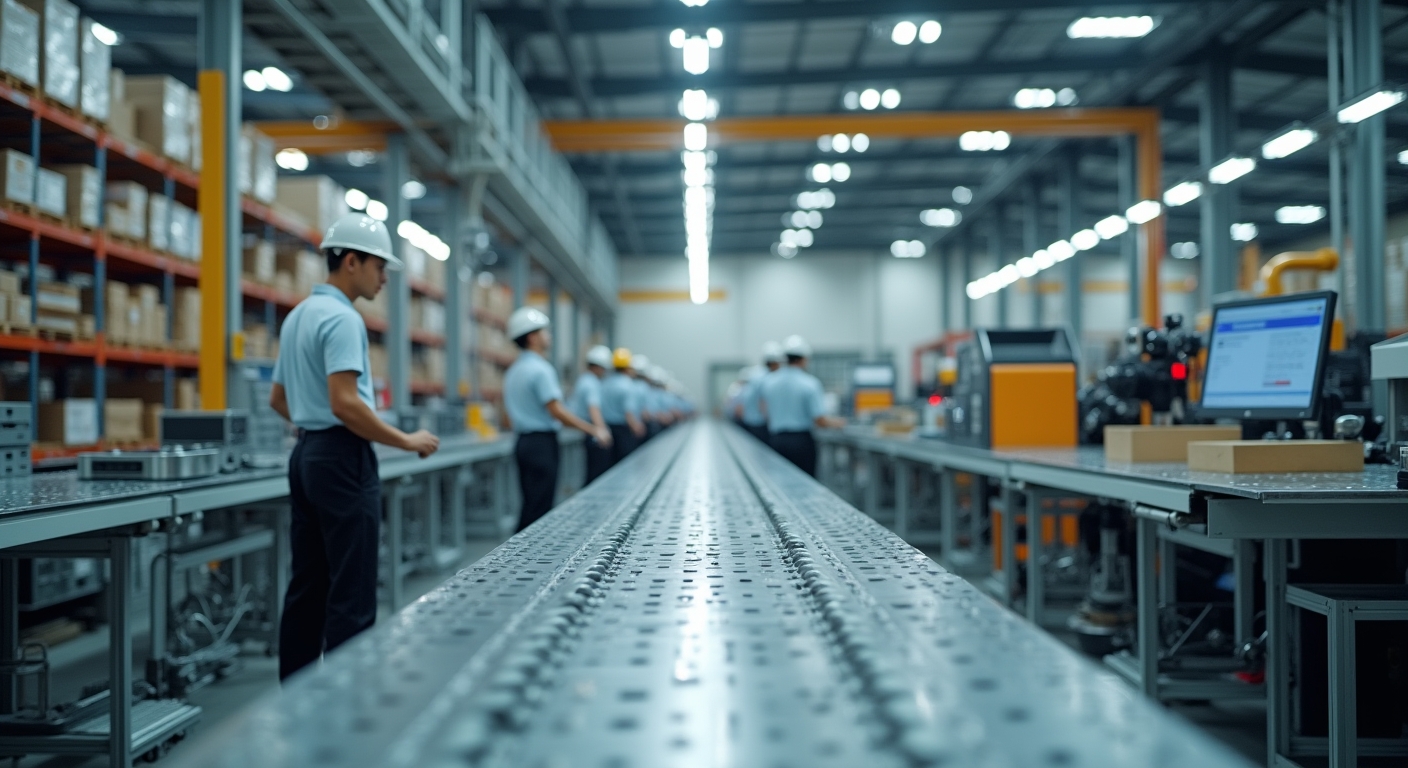

Manufacturing industries in Malaysia include a broad group of sectors that convert raw materials, parts and intermediate goods into finished products for domestic use and export. The country’s industrial base spans electronics, automotive, food processing, medical products, plastics, rubber, metalworking and precision engineering, supported by established supply chains and export-focused production.
For investors, buyers, SME owners and factory operators, understanding these sectors is useful because Malaysia is not defined by a single industry. It operates as a connected manufacturing ecosystem where component makers, contract manufacturers, packaging suppliers, machinery firms and logistics providers often depend on one another. That makes sector selection more nuanced than simply asking which industry is largest. The better question is which industries are most relevant to your product, sourcing strategy, quality requirements and target market.
What are the main manufacturing industries in Malaysia?
The main manufacturing industries in Malaysia are electrical and electronics, automotive and transport equipment, food and beverage manufacturing, medical device and healthcare products, plastics and rubber products, chemicals, machinery and equipment, metal fabrication, and precision engineering. Together, these sectors support both local consumption and export-oriented manufacturing.
Malaysia’s manufacturing sectors range from high-volume assembly and processing to specialised engineered production. Some industries focus on consumer markets, such as packaged foods and household products, while others serve industrial supply chains through components, tooling, industrial materials and contract production. This breadth is one reason the Malaysia manufacturing sector is frequently discussed in relation to regional supply chains and export manufacturing.
| Industry | Typical products | Business relevance |
|---|---|---|
| Electrical and electronics | Components, assemblies, semiconductors, industrial electronics, consumer electronics parts | Supports export manufacturing, contract production and advanced supply chains |
| Automotive and transport equipment | Vehicle assemblies, metal parts, plastic parts, wiring, aftermarket components | Links with tooling, machining, stamping and tiered supplier networks |
| Food and beverage | Processed foods, ingredients, packaged products, beverages | Important for domestic consumption, branding, packaging and export readiness |
| Medical device and healthcare products | Disposable products, components, packaging, precision-made healthcare items | Requires traceability, quality control and clean production practices |
| Plastics, rubber and chemicals | Moulded parts, films, packaging, industrial rubber products, compounds | Supplies many downstream sectors including electronics and automotive |
| Machinery, metalworking and precision engineering | Fabricated parts, machined components, tools, jigs, fixtures, equipment frames | Builds upstream capability for higher-value and custom manufacturing |
Why Malaysia is a major manufacturing hub
Malaysia is widely regarded as an important manufacturing location because it combines industrial capability with regional connectivity. Positioned in Southeast Asia, it serves as a practical base for companies supplying ASEAN markets as well as broader international customers. This matters not only for large exporters but also for SMEs that depend on reliable shipping routes, port access and supplier responsiveness.
Another strength is the presence of established industrial ecosystems. In practical terms, this means manufacturers can often source packaging, parts, tooling, sub-assemblies, maintenance services and logistics support within the same wider industrial network. A company making consumer electronics, for example, may rely on local plastic moulders, metal stampers, cable assemblers, testing providers and transport partners rather than building every capability in-house.
Malaysia is also important for manufacturing because many sectors are organized around export manufacturing. Factories are often built to meet external customer requirements for consistency, documentation, lead time and quality control. That export orientation tends to shape how suppliers operate, how production lines are set up and how manufacturers approach traceability and process discipline.
Workforce capability is another factor. Manufacturing in Malaysia includes labour-intensive operations, but it also includes technical production environments that require process control, engineering support, maintenance planning, mold and die expertise, automation integration and quality assurance. As a result, the country’s manufacturing base is relevant across both volume production and more specialized industrial work.
Electrical and electronics manufacturing
Electrical and electronics manufacturing is one of the most recognized manufacturing industries in Malaysia. This sector covers a wide span of activity, from component production and sub-assembly work to finished product assembly and industrial electronic systems. Depending on the factory, outputs may include semiconductor-related items, printed circuit board assemblies, cables, connectors, sensors, power-related components, consumer device parts and control systems for industrial use.
It is helpful to separate this sector into two broad layers. The first is component manufacturing, where factories produce the parts that go into larger products. The second is final assembly, where those parts are integrated, tested and packaged into a finished device or module. A company may operate in either layer or both, but the commercial requirements can differ significantly. Component manufacturing often demands tight process consistency and material control, while final assembly usually places greater emphasis on throughput, testing, packaging and customer-specific configuration.
Typical processes in electronics manufacturing
Common electronics-related processes include:
- component fabrication and preparation
- surface-mount or through-hole assembly
- soldering and connection work
- testing and inspection
- enclosure or housing assembly
- cleaning, labelling and packaging
These processes matter because electronics manufacturing relies heavily on repeatability. Minor variation in materials handling, assembly conditions or testing discipline can affect product reliability, rework rates and customer acceptance.
Why the sector is commercially important
Electronics manufacturing Malaysia is often associated with export demand, contract manufacturing relationships and deep supporting supply chains. It also creates business for other sectors such as plastics manufacturing Malaysia, metal fabrication, packaging, industrial automation and precision engineering. For procurement teams, the key advantage is often supplier specialization. For operators, the key challenge is maintaining yield, quality and delivery performance across complex production flows.
Automotive and transport equipment manufacturing
Automotive manufacturing Malaysia includes more than vehicle assembly. It also includes the broader network of suppliers that produce metal stampings, machined parts, plastic interior and exterior components, electrical harnesses, rubber items, fasteners, seating-related parts, lighting elements and aftermarket products. In other words, the sector is as much about supplier coordination as it is about final vehicles.
Transport equipment manufacturing can involve passenger vehicles, commercial applications, selected mobility systems and related industrial support products. Even when final assembly receives the most attention, much of the sector’s day-to-day manufacturing value comes from parts production and supplier integration.
How the supply chain is structured
Automotive supply chains are commonly organized in tiers. A top-level assembler purchases systems or large assemblies from direct suppliers, while those suppliers in turn depend on sub-suppliers for parts, materials, tooling and processes. This structure creates opportunities for different types of manufacturers:
- metalworking firms producing brackets, housings or structural components
- plastic moulders making trim or functional parts
- electronics firms supplying harnesses, connectors or modules
- machining specialists producing precision components
- tooling and fixture suppliers supporting repeatable production
What makes this sector distinctive
Automotive manufacturing places strong pressure on consistency, cost control and coordination between suppliers. A delayed or non-conforming part can affect an entire assembly schedule. That is why this sector is closely tied to stamping, CNC machining, welding, automation, inspection systems and production planning. It also supports a sizable aftermarket, where replacement parts, accessories and maintenance-related products create demand beyond original equipment assembly.
Food and beverage manufacturing
Food manufacturing Malaysia covers processed foods, packaged consumer goods, ingredients, beverage production and selected value-added agricultural processing. Compared with sectors such as electronics or automotive, food and beverage manufacturing deals more directly with hygiene, shelf life, packaging integrity, ingredient control and product traceability.
For many manufacturers, the core challenge is not just making the product. It is preserving quality from raw material intake through processing, filling, sealing, storage and delivery. That is why the sector depends heavily on production discipline, sanitation procedures, packaging design and dependable logistics.
Common activities in food and beverage production
- cleaning, sorting and preparation of ingredients
- mixing, blending, cooking or thermal processing
- filling, bottling or portioning
- sealing and packaging
- cold chain management for temperature-sensitive products
- batch coding and traceability control
Why this sector matters in Malaysia
Food and beverage manufacturing serves both domestic and export markets. It is relevant to large producers, contract packers and SME manufacturing Malaysia businesses alike. It also overlaps with packaging, cold storage, warehousing, ingredient supply and branding. Halal-related market relevance is often commercially important in Malaysia and export markets, but specific compliance requirements can vary by product and target destination, so businesses should verify current obligations before making certification or market access decisions.
From an operational perspective, food manufacturing is often judged on consistency, safety management, packaging functionality and responsiveness to retail or distributor requirements. The sector may appear less technical than electronics, but it is highly process-sensitive and often built around tight production controls.
Medical device and healthcare product manufacturing
Medical device manufacturing Malaysia is associated with healthcare products that require controlled production, consistent documentation and strong traceability. Depending on the business model, factories in this sector may produce disposable items, device components, packaging systems, sub-assemblies or precision-made healthcare products for international supply chains.
This is one of the manufacturing sectors in Malaysia where process discipline is especially important. Product acceptance may depend not only on physical quality but also on documentation, material identification, cleanliness, packaging integrity and the ability to trace production history. For buyers and operators, that means supplier evaluation usually goes beyond price and capacity.
What the sector typically requires
Common operational priorities include:
- controlled production environments
- validated or repeatable processes where required by the product
- traceability from materials to finished goods
- clear labelling and packaging control
- inspection and release procedures
- change management for materials or processes
Quality systems and market requirements often matter greatly in this sector, but exact standards, certification expectations and regulatory obligations depend on the product category and destination market. Those details should be verified before publication or before making procurement, compliance or market-entry decisions.
Why healthcare manufacturing stands out
Medical and healthcare manufacturing tends to reward companies that can combine precision production with dependable quality management. It also creates demand for clean packaging, moulded components, engineered materials, contract assembly and process validation support. In that sense, it strengthens surrounding capabilities in plastics, precision engineering and industrial quality systems.
Plastics, rubber and chemical-related manufacturing
Plastics manufacturing Malaysia and rubber-related manufacturing are foundational industries because they supply parts, packaging and intermediate goods to many other sectors. These are not always the most visible end markets, but they are often essential to how products are made, protected and transported.
Plastics manufacturing
Plastics manufacturing commonly includes injection moulding, extrusion, thermoforming, blow moulding, film production and compounding. These processes are used to make housings, trays, packaging films, containers, technical components, protective parts and consumer goods. The role of plastics is especially important in electronics, food packaging, automotive interiors, industrial handling and medical product packaging.
Injection moulding is a process where molten plastic is injected into a mold to form a precise part. It matters because it allows repeatable mass production of consistent shapes. Extrusion pushes material through a die to create continuous profiles such as sheets, films or tubing. It matters because many packaging and industrial products start from these continuous forms.
Rubber manufacturing
Rubber-related manufacturing can include seals, gaskets, gloves, industrial components, hoses, vibration-control parts and custom molded items. These products are relevant across automotive, machinery, general industry and healthcare applications. Material formulation, durability requirements and process control are often central to product performance.
Chemical-related manufacturing
Chemical-related manufacturing in this context often includes compounds, coatings, additives, cleaning products, process materials and industrial intermediates. While not every chemical operation serves the same market, many support downstream sectors by supplying the materials that enable coating, bonding, cleaning, protection or conversion processes.
Together, these industries are important because they sit in the middle of many supply chains. A single molded plastic component or rubber seal may be a small part of the bill of materials, but without it the final product cannot be assembled or shipped.
Machinery, metalworking and precision engineering
Machinery and equipment manufacturing, metalworking and precision engineering represent the upstream industrial capability behind many higher-value products. These sectors do not always receive as much public attention as branded consumer goods, but they are critical to industrial self-sufficiency, custom production and process improvement.
Metalworking and fabrication
Metalworking includes cutting, forming, welding, bending, stamping and finishing metal parts or structures. Fabricators may produce machine frames, brackets, enclosures, racks, supports, tanks or structural assemblies. These products are used across factories, warehouses, production lines and infrastructure projects.
Machining and engineered components
Machining is the controlled removal of material from a workpiece to create a part with the required dimensions and finish. In practice, this includes CNC milling, turning, drilling and related processes. Machining matters when a component needs tighter dimensional control, a precise fit with another part or a custom geometry that cannot be formed economically by simpler methods.
Precision engineering Malaysia typically refers to the design and manufacture of parts, tools and systems where accuracy, repeatability and functional performance are critical. This may involve tooling, molds, dies, jigs, fixtures, machine parts, automation components and custom-engineered assemblies. Such capabilities are valuable because they support not only end-product production but also the tools and equipment needed to keep factories running.
Why these sectors matter
These industries help manufacturers move beyond simple assembly into custom, higher-value work. A strong precision engineering base supports automation projects, tooling maintenance, fast design changes, process optimization and prototype development. For SMEs, it can also provide entry points into industrial supply chains without requiring consumer-facing brands.
Other important manufacturing industries in Malaysia
Beyond the major sectors above, several other industrial sectors in Malaysia play meaningful roles in domestic supply chains, exports or specialized production. The list below is broad rather than exhaustive.
| Sector | Typical outputs | Why it matters |
|---|---|---|
| Aerospace-related manufacturing | Components, sub-assemblies, maintenance-related parts, precision-made items | Supports specialized engineering, quality control and technical supply chains |
| Furniture manufacturing | Wood-based furniture, office furniture, home furnishings, contract furniture | Combines design, materials processing, finishing and export capability |
| Paper and packaging | Cartons, labels, corrugated packaging, protective packaging, printed packaging materials | Serves food, electronics, medical, industrial and e-commerce supply chains |
| Building materials | Processed construction materials, panels, fittings, fabricated building components | Supports domestic construction and project-based demand |
| Palm-based processing | Refined products, ingredients, oleochemical-related materials and downstream derivatives | Links agricultural resources to industrial and consumer manufacturing uses |
| Consumer goods manufacturing | Household items, personal care packaging, general merchandise, daily-use products | Important for brand owners, contract manufacturers and fast-moving supply chains |
These sectors show that major manufacturing industries in Malaysia extend well beyond a few headline categories. For many businesses, opportunities lie in the supporting layers of production rather than only the most visible finished goods.
How Malaysia’s manufacturing industries connect across supply chains
One of the most useful ways to understand the Malaysia manufacturing sector is to see it as an interconnected system. Individual sectors rarely operate in isolation. A finished exported product may depend on multiple industries working together long before final assembly begins.
For example:
- plastics suppliers produce housings, trays or protective packaging for electronics manufacturers
- precision engineering firms build tooling, jigs or fixtures used in automotive and medical production
- paper and packaging companies support food, healthcare and industrial shipping requirements
- metal fabricators produce machine frames, racks and enclosures for automated lines
- chemical suppliers provide coatings, cleaners, inks or process materials used across factories
| Supply chain stage | Example sectors involved | Typical role |
|---|---|---|
| Materials and intermediates | Plastics, rubber, chemicals, metals | Provide raw materials, compounds and basic industrial inputs |
| Component production | Electronics, machining, molding, stamping | Make parts and sub-components used in larger assemblies |
| Tooling and equipment support | Precision engineering, machinery, metal fabrication | Enable production capability and process control |
| Final assembly and packaging | Electronics, automotive, food, medical, consumer goods | Integrate, test, finish and pack products for sale or export |
| Distribution and export | Packaging, warehousing, logistics support | Protect goods and move them to local or international markets |
This ecosystem view matters for sourcing and investment decisions. A sector may look attractive on demand alone, but its real strength often depends on supplier depth, tooling access, packaging availability, engineering support and logistics reliability.
How to evaluate a manufacturing industry in Malaysia
Not every industry suits every investor, buyer or SME. A practical way to compare manufacturing sectors in Malaysia is to assess them against a common set of business criteria rather than focusing on general market perception alone.
- Clarify the demand profile. Is the sector driven mainly by domestic consumption, export demand, industrial projects or long-term contracts?
- Assess supplier depth. Can you source materials, packaging, parts, tooling and maintenance support locally or regionally with reasonable reliability?
- Review technology intensity. Does the sector depend more on labour, automation, process engineering, clean environments or specialized testing?
- Understand quality requirements. Are customers sensitive to appearance, dimensional accuracy, traceability, hygiene, documentation or all of the above?
- Estimate capital intensity. Does entry require heavy equipment, molds, tooling, clean production infrastructure or complex validation work?
- Consider resilience factors. How exposed is the sector to imported inputs, supply disruptions, process bottlenecks or volatile customer demand?
| Evaluation factor | What to examine | Why it matters |
|---|---|---|
| Demand profile | Domestic, export, project-based or contract-driven demand | Shapes revenue stability and production planning |
| Supplier depth | Availability of materials, packaging, tooling and service partners | Reduces lead times and operational risk |
| Technology intensity | Need for automation, process control, testing or clean production | Determines skill needs and equipment complexity |
| Labour needs | Manual, semi-automated or highly technical staffing model | Affects recruitment, training and operational flexibility |
| Quality and compliance burden | Documentation, traceability, hygiene or customer audits | Influences process discipline and management systems |
| Capital intensity | Tooling, machinery, utilities, facility setup and maintenance | Impacts entry barriers and scaling decisions |
| Supply chain resilience | Import dependence, single-source risks, inventory sensitivity | Helps assess long-term operating stability |
For buyers, this framework helps shortlist the right supplier base. For manufacturers, it helps identify where operational advantage is realistic. For SMEs, it can highlight sectors where niche specialization may be more practical than broad competition.
Key trends shaping manufacturing industries in Malaysia
Several cross-industry trends are influencing how manufacturers operate in Malaysia. These are best understood as directional changes rather than fixed forecasts.
Automation and digitalisation
More manufacturers are evaluating automation to improve consistency, reduce dependence on repetitive manual tasks and strengthen process visibility. Digital tools are also becoming more relevant for production monitoring, maintenance planning, traceability and quality reporting.
Higher expectations for traceability
Traceability is increasingly important in sectors such as food, healthcare, electronics and export-oriented manufacturing. Customers may expect clearer batch history, supplier records, inspection documentation and packaging control.
Supply chain localisation and diversification
Recent global disruptions have increased interest in stronger regional sourcing, dual sourcing and supplier diversification. This can create opportunities for local manufacturers that can deliver stable quality and shorter lead times.
Pressure for higher-value production
Many manufacturers are trying to move from basic production into more specialized, engineered or process-sensitive work. This may include custom tooling, complex assembly, precision parts, validated packaging or higher-specification industrial products.
Sustainability and resource efficiency
Manufacturers across sectors face growing pressure to manage waste, material usage, packaging choices, energy consumption and customer expectations around responsible production. The exact requirements differ by customer and market, but the direction is clear: operational efficiency and environmental performance are becoming more closely linked.
Challenges facing manufacturers across sectors
Manufacturing in Malaysia offers breadth and capability, but it also comes with challenges that cut across industries.
Labour availability and skills development
Some sectors depend heavily on stable labour availability, while others require technical skills in maintenance, engineering, tooling, automation or quality systems. Recruitment, retention and training can therefore become operational constraints.
Energy and operating costs
Manufacturers often face pressure from utilities, materials, transport, maintenance and facility-related overheads. Even where customer demand is healthy, margins can be affected if process efficiency is weak or scrap and downtime are poorly controlled.
Compliance complexity
Different sectors face different customer, product and market requirements. A food producer, an electronics assembler and a medical supplier do not operate under the same documentation or process expectations. Requirements can vary depending on the product, process and destination market, so manufacturers need a disciplined approach to compliance rather than assumptions.
Supply chain disruptions
Imported materials, long lead times, tooling dependencies and transport disruptions can create production risk. Businesses that rely on a narrow supplier base may be especially exposed.
Quality control and process consistency
As supply chains become more demanding, quality issues become more expensive. Rework, returns, delayed shipments and failed audits can damage both profitability and customer relationships.
Technology adoption
Many manufacturers understand the value of automation and digitalisation, but implementation can be difficult. Challenges may include capital constraints, system integration, skill gaps and uncertainty about return on investment.
The practical takeaway is that sector attractiveness should always be weighed against execution difficulty. A promising market does not automatically become a strong manufacturing business if the underlying process, labour or supplier model is unstable.
Conclusion: choosing the right industry lens
The main manufacturing industries in Malaysia include electronics, automotive, food and beverage, medical products, plastics and rubber, chemicals, machinery, metalworking and precision engineering. Each sector plays a different role within the wider industrial base, and many are closely linked through shared suppliers, tooling, packaging, logistics and export channels.
The right industry lens depends on what you need to achieve. A buyer may focus on supplier depth and quality control. An investor may compare capital intensity and export orientation. An SME may look for niche entry points in tooling, packaging, components or contract production. The most useful next step is to compare sectors based on supply chain depth, process complexity, quality demands and market resilience rather than headline visibility alone.
Frequently Asked Questions
What are the biggest manufacturing industries in Malaysia?
The most prominent manufacturing industries in Malaysia include electrical and electronics, automotive and transport equipment, food and beverage manufacturing, medical device and healthcare products, plastics and rubber, chemicals, and machinery and precision engineering. Their relative size can vary depending on the measure used, so current rankings should be verified with authoritative data before publication.
What products are commonly manufactured in Malaysia?
Commonly manufactured products include electronic components and assemblies, vehicle parts, processed foods, beverages, medical and healthcare products, plastic packaging, rubber goods, machined components, fabricated metal parts and industrial equipment-related items.
Why is Malaysia attractive for manufacturing investment?
Malaysia is attractive for manufacturing investment because it offers established industrial ecosystems, access to regional and export markets, supporting supplier networks, logistics connectivity and capabilities across both high-volume and specialized manufacturing activities.
Which manufacturing industries in Malaysia are export-oriented?
Export-oriented manufacturing in Malaysia is often associated with sectors such as electronics, medical products, selected automotive components, packaging-related products and other industrial goods supplied into regional or global value chains. Exact export strength differs by product segment and should be assessed using current trade data where needed.
How do SMEs fit into Malaysia’s manufacturing sector?
SMEs are important to Malaysia’s manufacturing sector because they often supply tooling, fabricated parts, molded components, packaging, sub-assemblies, maintenance services, contract processing and niche engineering support. Many operate as specialized suppliers within larger industrial supply chains rather than as large end-product manufacturers.